

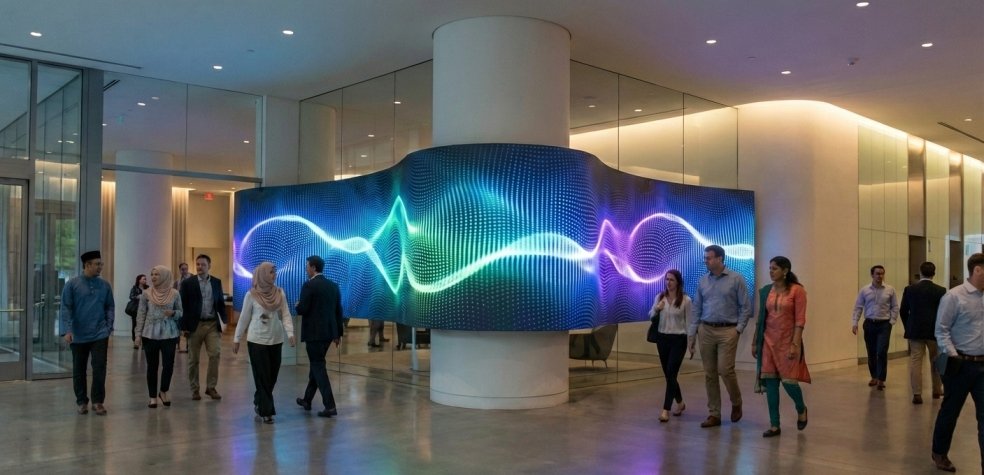
Visual technology has evolved rapidly over the past few decades. From bulky cathode-ray tubes to early flat panels, the journey toward clearer, brighter displays has been relentless. Now, the led screen stands at the very forefront of this evolution, serving as a central tool in modern marketing and public broadcasting.
Brands and event organisers continually seek new ways to capture attention. Static billboards and printed banners struggle to engage audiences accustomed to moving digital content. High-definition visual technology solves this problem by bringing physical environments to life with vibrant, moving imagery.
By combining brilliant colours with dynamic capabilities, modern displays create memorable experiences that leave lasting impressions on viewers. This shift is permanently altering the landscape of both advertising and live entertainment, providing new avenues for creativity and audience connection.
The Technical Advantages of Modern Displays
The widespread adoption of digital displays is rooted in their impressive technical capabilities. These features make them highly adaptable to a variety of environments and use cases.
Superior Brightness and Clarity
Outdoor environments present significant challenges for visual media, primarily due to competing sunlight. Modern panels overcome this through exceptional brightness levels that remain visible even at midday. The high contrast ratios ensure that colours appear rich and deep, making content easy to read and visually striking from long distances.
Energy Efficiency
Despite their powerful output, modern display panels are surprisingly kind to the environment and the electricity bill. Advances in diode technology mean these displays consume significantly less power than older lighting methods. This energy efficiency makes them a sustainable choice for businesses looking to operate large-scale displays continuously without incurring astronomical utility costs.
Seamless Scalability
A major technical triumph of these visual systems is their modular nature. Individual panels can be linked together to create displays of almost any size or shape. Because the borders between panels are practically invisible, the final result is a massive, seamless canvas. This scalability allows venues to build custom screens that perfectly fit their unique architectural spaces.
Transforming the Advertising Industry
The marketing sector has been quick to leverage this technology, fundamentally changing how brands communicate with consumers in public spaces.
Dynamic Digital Out-of-Home Displays
Digital out-of-home (DOOH) advertising has largely replaced traditional static billboards in major cities. These digital billboards allow advertisers to rotate multiple campaigns on a single screen. Brands can schedule specific advertisements to run at specific times of the day, targeting commuters in the morning and restaurant-goers in the evening. This dynamic scheduling maximises the utility of prime advertising real estate.
Interactive Street Furniture
Bus shelters, kiosks, and public transit stations are seeing a massive visual upgrade. High-resolution screens integrated into street furniture often include touch capabilities or sensors. Passersby can interact with the advertisements, search for local maps, or download discount codes directly to their smartphones. This level of interaction turns passive viewers into active participants, generating higher engagement rates for advertisers.
Revolutionising Live Events and Concerts
The entertainment sector relies heavily on spectacle. Advanced visual panels have given set designers and event producers an entirely new medium to work with.
Immersive Stage Backdrops
Concert stages no longer rely solely on physical props. Enormous digital backdrops instantly transport performers and audiences to different worlds. A stage can look like a futuristic cityscape for one song and a tranquil forest for the next. The visuals can be synchronised precisely with the music and lighting, creating a fully cohesive and immersive sensory experience.
High-Definition Viewing for the Masses
Large festivals and sporting events often draw crowds that stretch far back from the main action. Strategically placed delay screens ensure that every attendee has a perfect view of the event, regardless of their ticket tier. Because the technology supports ultra-high-definition resolutions, close-up shots of performers or athletes retain perfect clarity, ensuring the entire crowd feels connected to the performance.
Future Trends in Display Technology
The innovation within this sector shows no signs of slowing down. Several emerging trends promise to push the boundaries of visual communication even further.
Transparent and Curved Surfaces
Engineers are developing screens that offer high-transparency rates when turned off, blending seamlessly into glass storefronts or office windows. When activated, they display vibrant images without entirely blocking the view behind them. Additionally, flexible modules allow for the creation of convex and concave curved surfaces. This flexibility means digital canvases can wrap around structural pillars or form sweeping architectural waves.
AI-Integrated Content Delivery
Artificial intelligence is beginning to play a crucial role in how content is displayed. Cameras and sensors mounted near screens can analyse the demographic makeup of a crowd or track current weather conditions. The AI system then automatically adjusts the displayed content to match the audience or environment. For instance, an outdoor screen might promote hot coffee during a sudden rain shower and switch to iced beverages when the sun comes out.
Maximising Long-Term ROI with Visual Tech
Investing in high-quality digital displays requires upfront capital, but the financial returns are substantial. The durability of the hardware ensures a long operational lifespan with minimal maintenance. Furthermore, the ability to instantly update content without printing or installation costs saves significant money over time.
For advertising networks, the capability to sell the same ad space to multiple clients through rotating DOOH slots multiplies revenue potential. For event venues, state-of-the-art visual infrastructure attracts top-tier performers and justifies premium ticket pricing. Ultimately, integrating advanced visual technology is a strategic business decision that pays ongoing dividends in both engagement and profitability.