

The way we interact with technology has shifted dramatically over the past few decades. Keyboards gave way to mice. Mice gave way to touchpads. And then, with the arrival of the multi touch screen, something fundamentally changed — not just in how we use devices, but in how we think about them. Tapping, pinching, swiping, and rotating became second nature almost overnight. Today, these gestures feel so instinctive that handing a young child a non-touch screen often results in confusion.
But how did we get here? And where are multi-touch interfaces taking us next?
From Resistive Panels to Capacitive Revolution
The history of touch technology stretches back further than most people realise. Early touchscreens, developed in the 1970s and 1980s, relied on resistive technology — two flexible layers that made contact when pressed. They worked, but they were clunky, imprecise, and limited to single-point input. You needed a stylus or a firm fingernail to get reliable results.
The real turning point came with capacitive touch technology. Rather than detecting physical pressure between two layers, capacitive screens sense the electrical charge of a human finger. This allowed for far greater accuracy and, crucially, the ability to detect multiple simultaneous touch points.
When Apple launched the first iPhone in 2007, it brought multi-touch interaction into mainstream consciousness. Suddenly, pinch-to-zoom wasn’t a laboratory concept — it was something millions of people were doing before breakfast. The technology had existed in research settings for years, but the iPhone made it personal, accessible, and desirable.
How Multi-Touch Screens Actually Work
At its core, a capacitive multi-touch screen is a grid of electrodes embedded beneath a glass surface. When a finger touches the screen, it disrupts the electrostatic field at that point. The device’s processor tracks multiple disruption points simultaneously, interpreting their positions and movements as gestures.
Gesture recognition software then translates these inputs into actions. A two-finger pinch tells the device to zoom out. A swipe tells it to scroll. A long press triggers a context menu. The sophistication lies not in the hardware alone, but in the algorithms that distinguish between intentional gestures and accidental contact.
More advanced implementations also incorporate pressure sensitivity — technology that detects how hard you’re pressing, not just where. Apple’s 3D Touch (now evolved into Haptic Touch) and certain stylus-compatible displays use this to unlock additional layers of interaction, making the experience feel more nuanced and responsive.
Transforming Industries Beyond Consumer Electronics
Multi-touch technology has quietly reshaped entire sectors, far beyond smartphones and tablets.
Education
Interactive whiteboards have replaced static projector screens in many classrooms. Students can manipulate diagrams, annotate text, and collaborate on shared canvases in real time. Research suggests that tactile, hands-on learning improves retention — and multi-touch interfaces bring that principle into digital environments. Younger students, in particular, take to touch-based learning tools with remarkable ease.
Healthcare
In surgical and clinical settings, touch interfaces have reduced the need for staff to physically handle keyboards or mice, cutting down on cross-contamination risks. Radiologists use multi-touch displays to manipulate 3D scans with their hands, rotating and zooming through imagery far more intuitively than a mouse ever allowed. Some operating theatres now use large-format touch panels to display patient data in real time, keeping information accessible without requiring staff to step away from the patient.
Creative Professions
Graphic designers, illustrators, and video editors have embraced touch and stylus input as a complement to traditional workflows. Tools like Adobe Fresco and Procreate are built around pressure-sensitive, multi-touch interaction. The result is a drawing experience that closely mimics working on physical paper — with the added benefits of infinite undo and digital layers.
Making Technology More Accessible
One of the most significant, yet often overlooked, contributions of multi-touch interfaces is their role in accessibility.
Traditional computing relied heavily on fine motor skills and familiarity with abstract input devices. A mouse, for example, requires users to develop a mental map between their hand movements on a desk and the cursor’s movement on screen. Touch interfaces eliminate that abstraction entirely. You point at what you want to interact with — and you interact with it.
For users with cognitive disabilities, this directness lowers the barrier to entry considerably. For older adults who grew up without computers, touch interaction often feels more natural than learning keyboard shortcuts. And for individuals with certain physical disabilities, multi-touch gestures can be customised and simplified to suit individual needs.
Operating systems like iOS and Android have also built robust accessibility features around touch input — including gesture-based navigation, adjustable touch sensitivity, and assistive touch overlays that create virtual controls for users who cannot interact with the standard interface.
What Comes Next
The trajectory of multi-touch technology points towards interfaces that are even more responsive, adaptive, and immersive.
Haptic feedback is perhaps the most exciting near-term development. Current devices can simulate a basic click sensation, but researchers are working on surfaces that can generate a range of tactile sensations — the feeling of a button depressing, a texture beneath your fingertip, or resistance that varies based on the content you’re touching. This would bring a new dimension of realism to digital interaction.
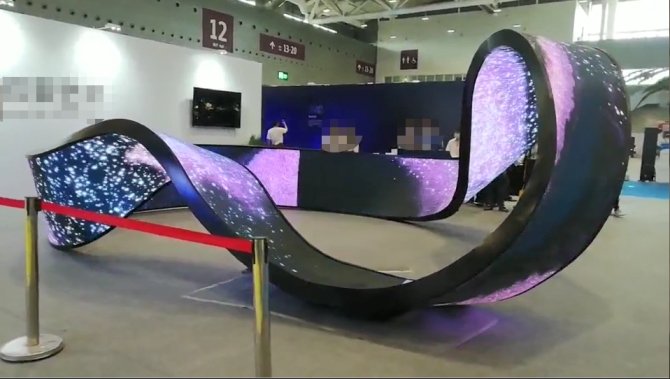
Foldable displays are already commercially available, though still evolving. As hinge technology matures and screen materials become more durable, foldable devices will enable new form factors that shift between phone, tablet, and laptop modes. Multi-touch interfaces will need to adapt dynamically to these changing shapes — and early signs suggest they’re up to the challenge.
Seamless hardware integration is another frontier. The boundary between screen and device is beginning to dissolve. Concepts like under-display cameras, sensors embedded throughout a device’s body, and edge-to-edge interactive surfaces suggest a future where the entire device becomes an input surface — not just a rectangular panel in the middle.
A Shift That’s Still Unfolding
Multi-touch screens haven’t just changed how we tap and swipe — they’ve changed how we relate to the devices around us. The shift from indirect, abstract input methods to direct, gesture-based interaction represents one of the most significant changes in human-computer interaction since the invention of the mouse.
As haptic technology matures, displays become more flexible, and interfaces grow more intelligent, the relationship between humans and machines will continue to evolve. The screens of tomorrow won’t just respond to touch — they’ll respond to context, intent, and nuance in ways we’re only beginning to imagine.