

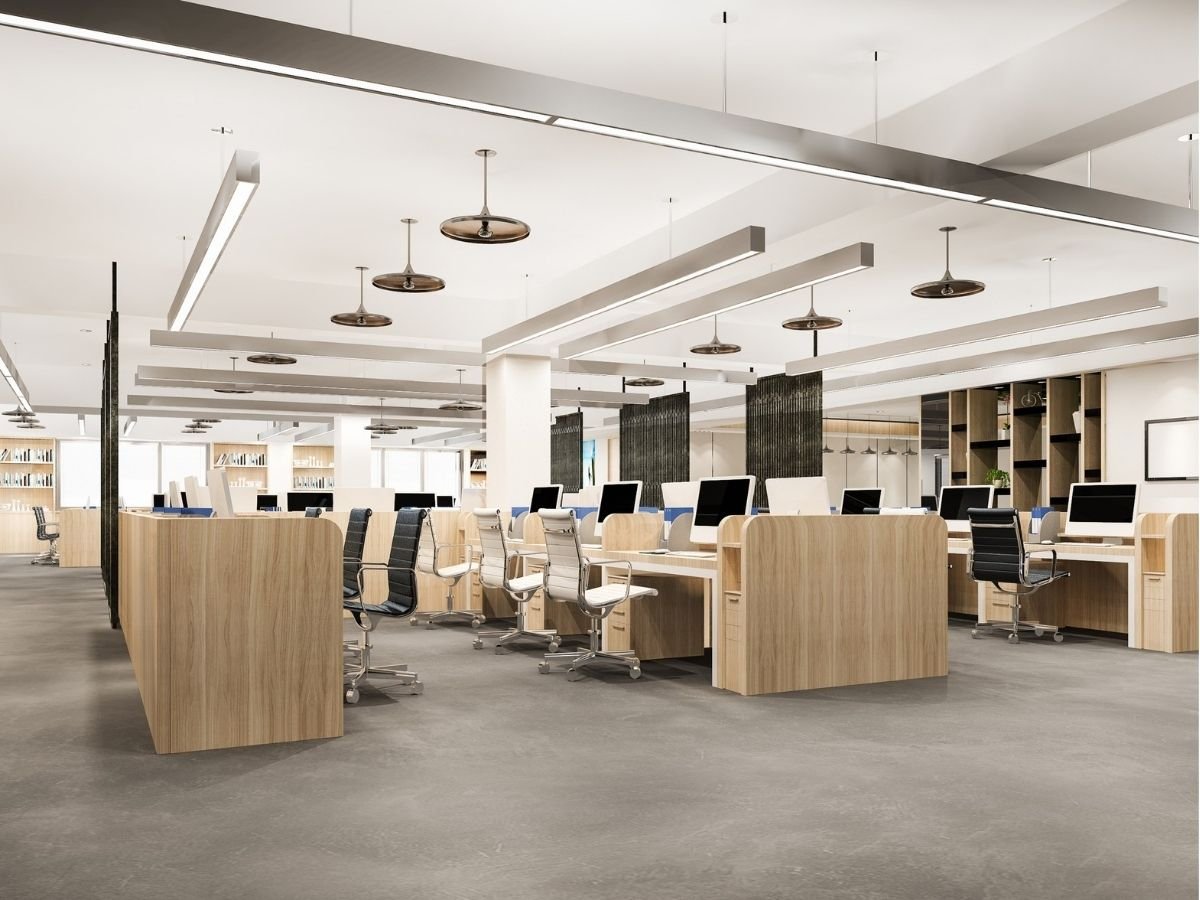
Most offices don’t need custom furniture. They need the right catalogue product, specified properly. But when a reception desk has to wrap an odd column, when a meeting table must hide cable management for twelve people, or when standard depths waste 400mm of a narrow floorplate, custom becomes the cheaper answer — provided you run the purchase as a project rather than a shopping trip.
Key Takeaways
- Custom pays off when space constraints, brand identity, or unusual dimensions make catalogue products wasteful — not simply because you want something unique.
- Write a dimensioned brief before you contact makers. Vague briefs produce quotes you cannot compare.
- Expect longer timelines than catalogue orders. Established joinery workshops commonly quote around 10 to 14 weeks, with complex hand-finished work running longer (Emerald & Oak).
- Sign off on shop drawings and material samples before production starts. Changes after cutting are charged at full cost.
When Does Custom Office Furniture Make Sense?
Custom is justified when a standard product cannot do the job without waste. The three most common triggers are geometry, brand, and function.
Geometry is the strongest case. Columns, sloped ceilings, angled walls, and shallow floorplates all defeat rectangular catalogue furniture. A bespoke run built to your actual wall length seats more people than standard modules that leave a dead 600mm gap at the end of every row.
Brand is the second. Reception desks, boardroom tables, and client-facing joinery are the pieces visitors photograph. Bespoke work here is made to an original drawing for one client and one space, with frame, joinery, finish, and fill all specified rather than picked from a catalogue (Emerald & Oak).
Function is third: integrated AV, hidden power, acoustic backing, storage sized to your actual filing. Everywhere else, buy catalogue — you get better warranties and faster replacement parts.
Step 1: Define the Brief Before You Call a Maker
A maker cannot quote what you have not described. Before any calls, assemble:
- A dimensioned floor plan with column positions, ceiling heights, power and data points, and door swings.
- Headcount and work patterns — how many people, how often on site, how much of the day on video calls.
- A written scope per piece: quantity, overall dimensions, key materials, finish direction, and any integrated services.
- Your budget range and immovable dates — lease start, staff move-in, or a client visit.
- Compliance requirements — fire ratings for the building, and the ergonomic standards you must meet.
Reference photographs help, but dimensions decide the price. A brief with numbers gets comparable quotes; mood images get quotes you cannot compare.
Step 2: Shortlist and Qualify Manufacturers
Aim for three quotes from makers who have delivered comparable commercial work, and include at least one local manufacturer — AFC, the office furniture manufacturer in Singapore, for instance — since domestic production shortens shipping and makes workshop visits practical. Ask each one:
- Do you manufacture, or subcontract? Resellers are fine, but it changes who is accountable when a finish is wrong.
- Can I see a completed project of similar scope? Request a site visit or a reference client, not just a portfolio image.
- Who produces the shop drawings, and are they included? Technical drawings are the contract between your expectation and their machine.
- What is your defects and warranty position? Get the coverage period, what counts as a defect, and the response time in writing.
- What happens if the site isn’t ready? Storage and re-delivery fees are a common surprise.
Bespoke commercial projects typically move through planning, 3D rendering, technical shop drawings, a prototype or mock-up, and a production review before anything ships (Emerald & Oak). A maker who cannot describe those stages is improvising.
Step 3: Read the Quote Like a Contract
Comparable quotes list the same things. Check that each states materials by specification (board type, thickness, edge treatment, laminate or veneer code), finish and colour reference, hardware brand and model, quantity, delivery method, and installation scope.
Then look at what is excluded. High-floor delivery, after-hours access, disposal of old furniture, and electrical connection often sit outside the price. A quote that is 15% cheaper and excludes installation is not cheaper.
Payment is usually staged: a deposit at order, the balance on delivery. Never pay in full up front, and tie a retention of 5% to 10% to snag-free completion.
Step 4: Approve Drawings, Samples, and a Prototype
This is the step buyers skip and regret. Before production begins, insist on:
- Shop drawings showing every dimension, at a scale you can read. Check them against your floor plan yourself.
- Physical material samples in your actual office lighting. Laminates and veneers read very differently under warm downlights than in a showroom.
- A prototype for any piece being made in volume. If you are ordering forty workstations, build one, sit at it for a week, and then release the rest.
Production cannot start until dimensions, finishes, quantities, drawings, and commercial terms are confirmed (Somervilles). Every day you delay approval pushes the delivery date, so give sign-off a named owner and a deadline.
Step 5: Plan Production, Delivery, and Installation
Build the schedule backwards from your move-in date, and add contingency. Straightforward custom work using stocked materials can be produced in a matter of weeks, while complex bespoke pieces with hand-finishing run substantially longer (FOH Furniture).
Before delivery day, confirm loading bay booking, lift dimensions, corridor clearances, and the site contact. Measure the narrowest point on the route — a boardroom table that fits the room but not the lift is an expensive failure.
On completion, walk the site with the installer and produce a written snag list with photographs and a rectification date before releasing the retention.
Common Mistakes That Blow the Budget
- Ordering before the layout is final. Workshop rework costs more than a week of planning. Settle the plan first.
- Customising the wrong items. Bespoke task chairs rarely pay off; bespoke storage often does.
- Ignoring reconfigurability. Furniture built for one floorplate is worthless at the next lease.
- Underestimating lead time, then paying overtime to recover it.
Frequently Asked Questions
Is custom office furniture more expensive than catalogue furniture? Per piece, usually yes. Per usable square metre, often no, because bespoke work removes wasted space.
How far ahead should I start? Begin specifying three to four months before move-in, and earlier for imported materials or a prototype round.
Can I mix custom and off-the-shelf? Most well-run fit-outs do. Commission the fixed joinery and client-facing pieces; buy catalogue seating, desks, and storage.
Bottom Line
Custom office furniture rewards preparation. Write a dimensioned brief, qualify three real manufacturers, compare quotes line by line, approve drawings and samples before cutting starts, and schedule with contingency. Done that way, bespoke is a controlled purchase rather than a gamble.